Wednesday, February 14, 2024

Happy Valentine's Day!

\
What makes a house a home?  It's the things that reflect the uniqueness of those that live there, the things that are treasured, the things that give comfort, the things that create memories.    
 
Gingerbread cookies have always been a favorite in my house... especially around Valentine's Day.  The wonderful smell when they're baking, the delightful spicy flavor with just a hint of sweetness, and the joy that comes from knowing they are treasured, bring comfort, and create memories are all a part of what makes my house a home.  
 
 
May whatever makes your house a home bring you joy each and every day.
Wishing you a Valentine's Day filled with sweetness and love.  
Pook    

Why So Many People Fall in Love with Homeownership

 Article Courtesy of Keeping Current Matters / The KCM Blog

Chances are at some point in your life you’ve heard the phrase, home is where the heart is. There’s a reason that’s said so often. Becoming a homeowner is emotional.

So, if you’re trying to decide if you want to keep on renting or if you’re ready to buy a home this year, here’s why it’s so easy to fall in love with homeownership.

Customizing to Your Heart’s Desire

Your house should be a space that’s uniquely you. And, if you’re a renter, that can be hard to achieve. When you rent, the paint colors are usually the standard shade of white, you don’t have much control over the upgrades, and you’ve got to be careful how many holes you put in the walls. But when you’re a homeowner, you have a lot more freedom. As the National Association of Realtors (NAR) says:

“The home is yours. You can decorate any way you want and choose the types of upgrades and new amenities that appeal to your lifestyle.”

Whether you want to paint the walls a cheery bright color or go for a dark moody tone, you can match your interior to your vibe. Imagine how it would feel to come home at the end of the day and walk into a space that feels like you.

Greater Stability for the Ones You Love Most

One of the hardest things about renting is the uncertainty of what happens at the end of your lease. Does your payment go up so much that you have to move? What if your landlord decides to sell the property? It’s like you’re always waiting for the other shoe to drop. Jeff Ostrowski, a business journalist covering real estate and the economy, explains how homeownership can give you more peace of mind in a Money Geek article:

“Homeownership means you are the boss and have the biggest say in your lifestyle and family decisions. Suppose your kids are in public school and you don’t want to risk having them change schools because your landlord doesn’t renew your lease. Owning a home would remove much of the risk of having to move.”

A Feeling of Belonging

You may also find you feel much more at home in the community once you own a house. That’s because, when you buy a home, you’re staking a claim and saying, I’m a part of this community. You’ll have neighbors, block parties, and more. And that’ll give you the feeling of being a part of something bigger. As the International Housing Association explains:

“. . . homeowning households are more socially involved in community affairs than their renting counterparts. This is due to both the fact that homeowners expect to remain in the community for a longer period of time and that homeowners have an ownership stake in the neighborhood.”

The Emotional High of Achieving Your Dream

Becoming a homeowner is a journey – and it may have been a long road to get to the point where you’re ready to take the plunge. If you’re seriously considering leaving behind your rental and making this commitment, you should know the emotions that come with this owning a home are powerful. You’ll be able to walk up to your front door every day and have that sense of accomplishment welcome you home. 

Bottom Line

A home is a place that reflects who you are, a safe space for the ones you love the most, and a reflection of all you’ve accomplished. Connect with a local real estate professional if you’re ready to break up with your rental and buy a home.

Monday, January 29, 2024

Will a Silver Tsunami Change the 2024 Housing Market?

 Article courtesy of Keeping Current Matters/The KCM Blog
Will a Silver Tsunami Change the 2024 Housing Market?

Have you ever heard the term “Silver Tsunami” and wondered what it’s all about? If so, that might be because there’s been lot of talk about it online recently. Let’s dive into what it is and why it won’t drastically impact the housing market.

What Does Silver Tsunami Mean?

A recent article from HousingWire calls it:

“. . . a colloquialism referring to aging Americans changing their housing arrangements to accommodate aging . . .”

The thought is that as baby boomers grow older, a significant number will start downsizing their homes. Considering how large that generation is, if these moves happened in a big wave, it would affect the housing market by causing a significant uptick in the number of larger homes for sale. That influx of homes coming onto the market would impact the balance of supply and demand and more.

The concept makes sense in theory, but will it happen? And if so, when?

Why It Won’t Have a Huge Impact on the Housing Market in 2024

Experts say, so far, a silver tsunami hasn’t happened – and it probably won’t anytime soon. According to that same article from HousingWire:

“. . . the silver tsunami’s transformative potential for the U.S. housing market has not yet materialized in any meaningful way, and few expect it to anytime soon.”

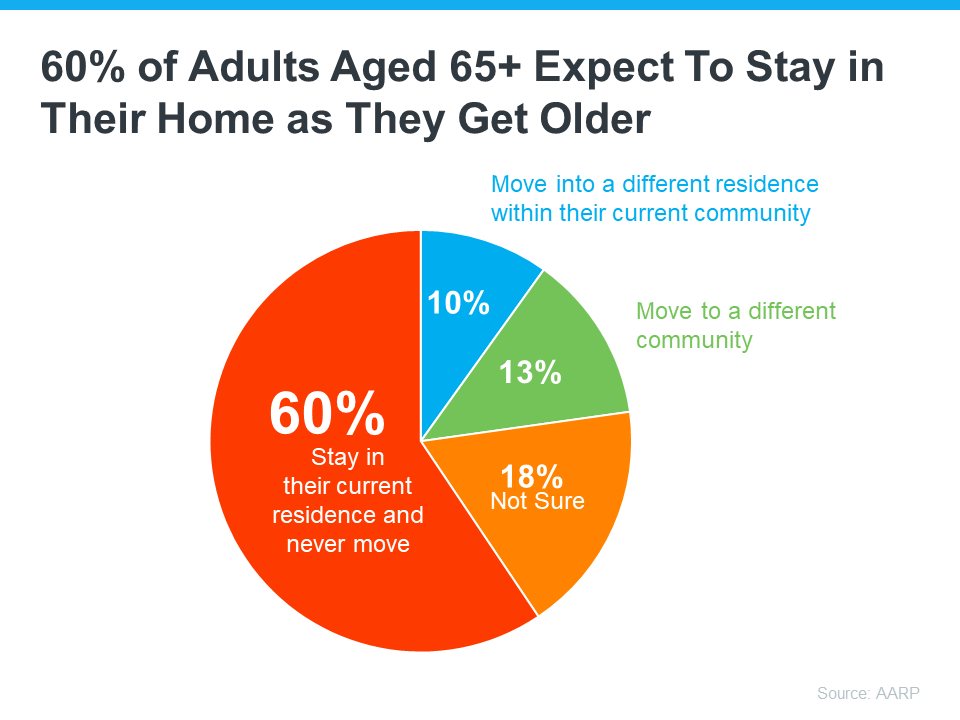
Here’s just one reason why. Many baby boomers don’t want to move. Data from the AARP shows over half of the surveyed adults ages 65 and up plan to stay put and age in place in their current home rather than move (see chart below):

Clearly, not every baby boomer is planning to sell or move – and even those who do won’t do it all at once. Instead, it will be more gradual, happening slowly over time. As Mark Fleming, Chief Economist at First American, says:

Demographics are never a tsunami. The baby boomer generation is almost two decades of births. That means they’re going to take about two decades to work their way through.”

Bottom Line

If you’re worried about a Silver Tsunami shaking up the housing market, don’t be. Any impact from baby boomers moving will be gradual over many years. Fleming sums it up best:


“Demographic trends, they don't tsunami. They trickle.”

Monday, January 22, 2024

3 Must-Do’s When Selling Your House in 2024

Article Courtesy of Keeping Current Matters/The KCM Blog
 
3 Must-Do’s When Selling Your House in 2024

If one of the goals on your list is selling your house and making a move this year, you’re likely juggling a mix of excitement about what’s ahead and feeling a little sentimental about your current home.

A great way to balance those emotions and make sure you’re confident in your decision is to keep these three best practices in mind when you’re ready to sell.


1. Price Your Home Right

The housing market shifted in 2023 as mortgage rates rose and home price appreciation started to normalize once again. As a seller, you still need to recognize how important it is to price your house appropriately based on where the market is today. Hannah Jones, Economic Research Analyst for Realtor.com, explains:

“Sellers need to become familiar with their local market and work closely with a local agent to make sure their listing is attractive to buyers. Buyers feeling the pressure of affordability are likely to be pickier, so a well-priced, well-maintained home is the ticket to drumming up big demand.”

If you price your house too high, you run the risk of deterring buyers. And if you go too low, you’re leaving money on the table. An experienced real estate agent can help determine what your ideal asking price should be, so your house moves quickly and for top dollar.

2. Keep Your Emotions in Check

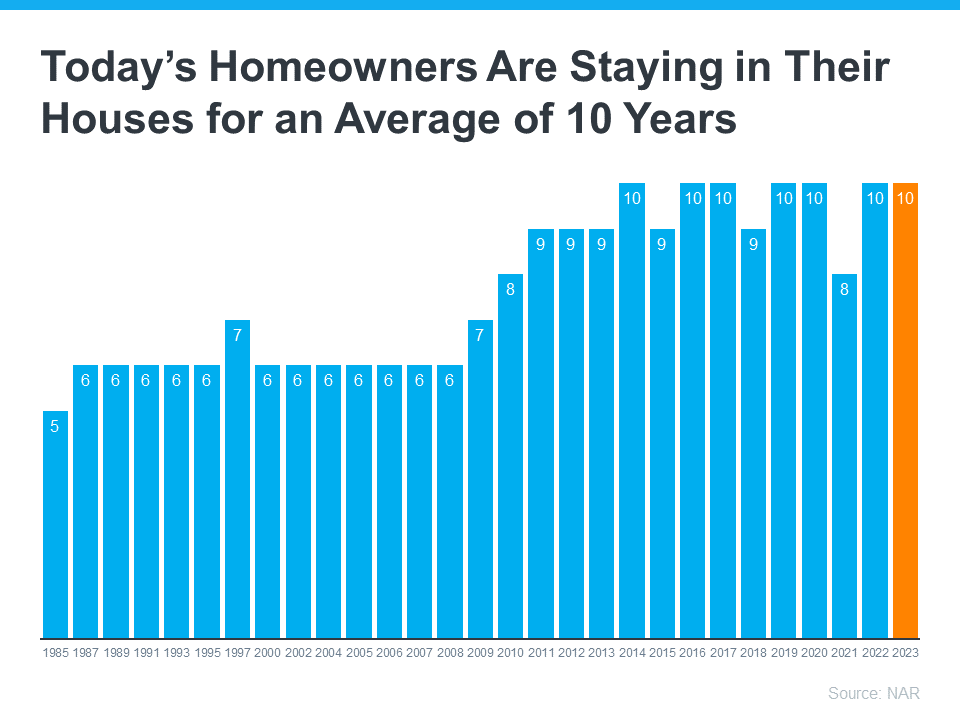
Today, homeowners are staying in their houses longer than they used to. According to the National Association of Realtors (NAR), since 1985, the average time a homeowner has owned their home has increased from 6 to 10 years (see graph below):

This is much more than what used to be the norm. The side effect, however, is when you stay in one place for so long, you may get even more emotionally attached to your space. If it’s the first home you bought or the house where your loved ones grew up, it very likely means something extra special to you. Every room has memories, and it’s hard to detach from the sentimental value.
 

For some homeowners, that makes it even tougher to separate the emotional value of the house from fair market price. That’s why you need a real estate professional to help you with the negotiations and the best pricing strategy along the way. Trust the professionals who have your best interests in mind.

3. Stage Your Home Properly

While you may love your decor and how you’ve customized your house over the years, not all buyers will feel the same way about your vibe. That’s why it’s so important to make sure you focus on your home’s first impression, so it appeals to as many buyers as possible.

Buyers want to be able to picture themselves in the home. They need to see themselves inside with their furniture and keepsakes – not your pictures and decorations. As Jessica Lautz, Deputy Chief Economist and Vice President of Research at NAR, says:

“Buyers want to easily envision themselves within a new home and home staging is a way to showcase the property in its best light.”

A real estate professional can help you with expertise on getting your house ready to sell.

Bottom Line

If you’re considering selling your house, reach out to a local real estate professional to help you navigate the process while prioritizing these must-do’s.

Friday, January 5, 2024

Achieving Your Homebuying Dreams in 2024 [INFOGRAPHIC]

 Infographic Courtesy of Keeping Current Matters / The KCM Blog

Some Highlights

Thursday, January 4, 2024

Why Pre-Approval Is Your Homebuying Game Changer

 Article Courtesy of Keeping Current Matters / The KCM Blog

If you’re thinking about buying a home, pre-approval is a crucial part of the process you definitely don’t want to skip. So, before you start picturing yourself in your new living room or dining on your future all-season patio, be sure you’re working with a trusted lender to prioritize this essential step. Here’s why.

While home price growth is moderating and mortgage rates have been coming down in recent weeks, affordability is still tight.  At the same time, there’s a limited number of homes for sale right now, and that means ongoing competition among hopeful buyers. But, if you’re strategic, there are ways to navigate these waters – and pre-approval is the game changer.

What Pre-Approval Does for You
To understand why it’s such an important step, you need to know more about pre-approval. As part of the homebuying process, a lender looks at your finances to determine what they’re willing to loan you. From there, your lender will give you a pre-approval letter to help you understand how much money you can borrow. Freddie Mac explains it like this:

A pre-approval is an indication from your lender that they are willing to lend you a certain amount of money to buy your future home. . . . Keep in mind that the loan amount in the pre-approval letter is the lender’s maximum offer. Ultimately, you should only borrow an amount you are comfortable repaying.”

Getting pre-approved starts to put you in the mindset of seeing the bigger financial picture, one step at a time. And the key is actually more than just getting a pre-approval letter from your lender. The combination of pre-approval and strategic budgeting is your golden ticket to understanding what you can actually afford. It saves you from painful heartaches down the road so you don’t fall in love with a house that might be out of reach.

Pre-Approval Helps Show Sellers You’re a Serious Buyer  
But that’s just the beginning. Let’s face it, there are more people looking to buy than there are homes available for sale, and that creates competition among homebuyers. That means you could see yourself in a multiple-offer scenario when you get ready to make your move. But getting pre-approved for a mortgage can help you stand out from other buyers.

In today’s fast-moving housing market, having that pre-approval in your back pocket can be your secret weapon. When sellers see you’re pre-approved, it tells them you’re a strategic and serious buyer. In a world of multiple offers, that’s a big deal. As an article from the Wall Street Journal (WSJ) says:

If you plan to use a mortgage for your home purchase, preapproval should be among the first steps in your search process. Not only can getting preapproved help you zero in on the right price range, but it can give you a leg up on other buyers, too.”

Pre-approval shows sellers you’re more than just a window shopper. You’re a buyer who’s already undergone a credit and financial check, making it more likely that the sale will move forward without unexpected delays or issues. Sellers love that because they see your offer as a reliable one. A win-win, right?

Bottom Line

So, before you start mentally arranging furniture in your dream home, let’s connect to get your pre-approval set. It’ll save you time, stress, and a lot of headaches that could come up along the way without it. The reality is, the more prepared you are, the more likely you are to land the home you’re longing for.


Monday, December 25, 2023

JUST LISTED - BEAUTIFUL MUIRFIELD VILLA

This beautiful villa went ACTIVE on MLS on Friday, December 22 
and went UNDER CONTRACT the same day.  
Click HERE for photos.
 
In case you missed it... Be sure to check out this recent blog posting:

MERRY CHRISTMAS!

However you are celebrating this holiday season, 
may it be a meaningful time filled with love, joy and hope.
Best wishes from my family to yours.
 

Monday, December 4, 2023

Experts Project Home Prices Will Rise over the Next 5 Years

 Article Courtesy of Keeping Current Matters/The KCM Blog

Even with so much data showing home prices are actually rising in most of the country, there are still a lot of people who worry there will be another price crash in the immediate future. In fact, a recent survey from Fannie Mae shows that 23% of consumers think prices will fall over the next 12 months. That’s nearly one in four people who are dealing with that fear – maybe you’re one of them.

To help ease that concern, here’s what the experts say will happen with home prices not just next year, but over the next five years.

Experts Project Ongoing Appreciation

While seeing a small handful of expert opinions may not be enough to change your mind, hopefully, a larger group of experts will reassure you. Here’s that larger group.

The Home Price Expectation Survey (HPES) from Pulsenomics is a great resource to show what experts
forecast for home prices over a five-year period. It includes projections from over 100 economists, investment strategists, and housing market analysts. And the results from the latest quarterly release show home prices are expected to go up every year through 2027 (see graph below):


And while the projected increase in 2024 isn’t as large as 2023, remember home price appreciation is cumulative. In other words, if these experts are correct after your home’s value rises by 3.32% this year, it should go up by another 2.17% next year.

If you’re worried home prices are going to fall, here’s the big takeaway. Even though prices vary by local area, experts project they’ll continue to rise across the country for years to come at a pace that’s more normal for the market.

What Does This Mean for You?

If you’re not convinced yet, maybe these numbers will get your attention. They show how a typical home’s value could change over the next few years using the expert projections from the HPES. Check out the graph below:

In this example, let’s say you bought a $400,000 home at the beginning of this year. If you factor in the forecast from the HPES, you could potentially accumulate more than $71,000 in household wealth over the next five years.

Bottom Line

If you’re someone who’s worried home prices are going to fall, rest assured a lot of experts say it’s just the opposite – nationally, home prices will continue to climb not just next year, but for years to come. If you have any questions or concerns about what’s next for home prices in your local area, connect with a real estate agent.

Friday, December 1, 2023

Preventing Frozen Pipes

Information Courtesy of Christa McMillan, CISR
Personal Risk Consultant at Main Street Insurance 


How to Prevent Frozen Pipes

Frozen pipes can present an invisible threat – one that you might not recognize until the weather starts to warm. By then, the water damage can be significant and costly. Fortunately, keeping your home warmer, at a consistent temperature, and better insulated can help protect your pipes from freezing this winter.


What Do You Do if You Have a Frozen Pipe?

If you suspect pipes in your home have been exposed to freezing temperatures, or

water is not flowing through a faucet normally, follow these steps to help reduce the

potential for water damage:

  • Locate and close the main water shutoff valve as soon as possible and before temperatures rise above freezing.
  • Open all faucets including those outside to drain remaining water from pipes.
  • Have buckets, towels and fans available to contain, clean-up and dry water leaks.
  • Slowly turn water back on and inspect for leaks. If there are leaks, be prepared to turn the water off immediately.
  • Also inspect pipes for damage in areas like attics and crawl spaces, where it is safe to do so.
  • Never use torches or heat guns to facilitate thawing as these can create fire hazards.
  • As temperatures increase above freezing, watch and listen for signs of water leaks.
  • If there is pipe damage, call a licensed plumber for repairs.


Why is a Frozen Pipe a Concern?

When water begins to freeze, it expands. This can cause both plastic and metal pipes to burst, possibly leading to significant water damage to your home.

  • Since water expands when it freezes, it puts unwanted pressure on pipes.
  • As water freezes, the force exerted from the expansion can cause a pipe to burst, regardless of the strength of the material.
  • You may not know you have a burst pipe as the water has turned to ice. Once the temperature starts to warm and thawing begins, leaking and flooding can occur.


Which Pipes Are Most at Risk?

Pipes that are most exposed to the elements, including those outdoors and along the

exterior walls of your home, may need extra protection during winter months. These

include the following:

  • Outdoor hose hookups and faucets.
  • Swimming pool supply lines.
  • Lawn sprinkler lines.
  • Water pipes in unheated, interior locations such as basements, crawl spaces, attics, garages and kitchen and bathroom cabinets.
  • Pipes running against exterior walls with little or no insulation.


How to Help Prevent Frozen Pipes

Before winter:

  • Check your home for areas where water pipes are located in unheated or poorly insulated areas. Be sure to check your basement, attic, crawl space, garage and within cabinets containing plumbing. Hot and cold water pipes should both be insulated.
  • Products such as pipe sleeves or UL-listed heat tape or heat cable can help insulate or heat exposed water pipes.

During winter:

  • Close inside valves supplying water to outdoor faucets and hookups.
  • Open outdoor faucets to allow residual water to drain; be sure to keep them open during the cold weather months, while the water supply is turned off.
  • Keep garage doors closed to help protect water pipes located in the garage.
  • Open the doors on cabinets where plumbing is located. This can help allow warmer air to circulate around the pipes.
  • For pipes that are at risk of freezing (both hot and cold water pipes), let water drip from faucets.
  • Keep the heat in your home set at a minimum of 55 degrees.
 
Christa B. McMillan, CISR
Personal Risk Consultant